
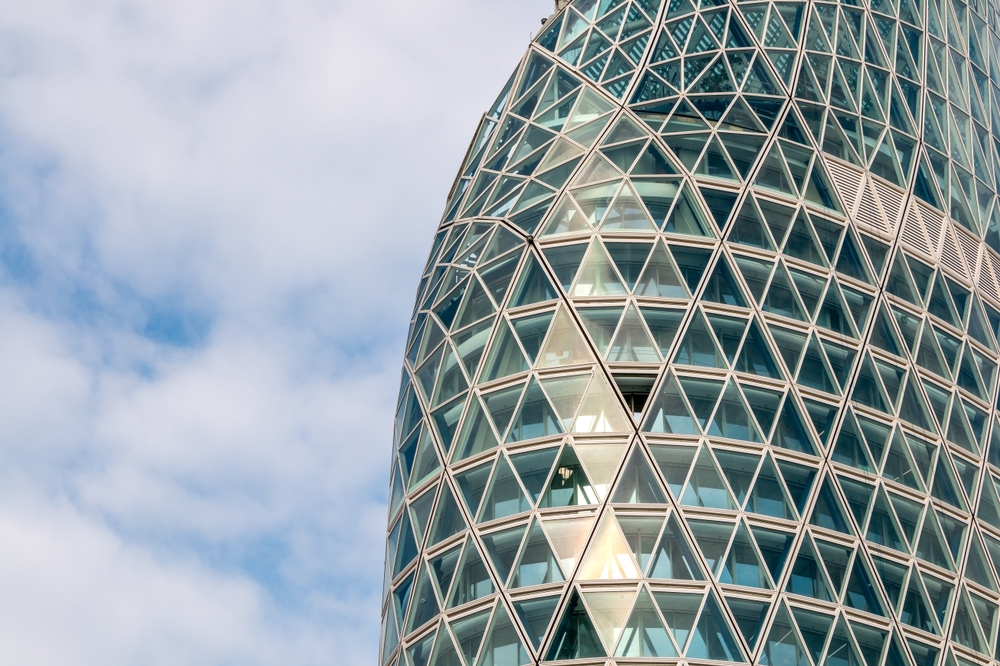
Our Managing Partner, Guido Alberto Inzaghi, comments in Ingenio on the judgment of the Criminal Court of Milan in the “Torre Milano” case, which acquitted the eight municipal officials involved in the proceedings concerning the construction of the tower under a SCIA (Certified Notice of Commencement of Works).
Although the Court held that the project should have been classified as new construction, requiring a building permit rather than a SCIA and the prior approval of an implementation plan (as the building exceeds both the 25-metre height threshold and the planning density threshold of 3 cubic metres per square metre), it excluded the defendants’ criminal liability, recognising that the officials had acted in good faith in light of the uncertainty surrounding the applicable regulatory framework.
This conclusion contrasts with the most recent judgment of the Council of State, delivered at the end of May, which instead classified projects of this nature as building renovation.
According to Inzaghi, this is precisely the most significant and critical aspect of the judgment: it confirms that the distinction between building refurbishment and new construction continues to be characterised by significant interpretative uncertainty.
Indeed, recent criminal case law has increasingly tended to classify demolition and reconstruction projects as new construction, even where the differences from the pre-existing building are only marginal.
As Inzaghi observes, this interpretation risks adversely affecting urban regeneration projects, since classifying a development as new construction entails a more burdensome authorisation procedure based on the issuance of a building permit and, where applicable, the prior approval of an implementation plan, with inevitable consequences for both project timelines and development costs.
For this reason, Inzaghi highlights the need to complete the reform of the Consolidated Building Act (Testo Unico dell’Edilizia) or, at the very least, to improve the efficiency of the planning framework and administrative procedures.
Only a clear regulatory framework, predictable interpretative rules and reliable authorisation timelines can ensure the competitiveness of the real estate market and effectively support Milan’s urban regeneration.